Shading Requirements & Production Timeline
Shading Requirements
Ginger is traditionally considered a shade-tolerant crop. Our production findings indicated that no more than 50% shading should be provided to balance ginger plant growth and rhizome (root) yield (Lashley et al., 2024). Intense sunlight could result in leaf scorch, especially in young and tender plants (Kaudo, 2014; Lashley et al., 2024).
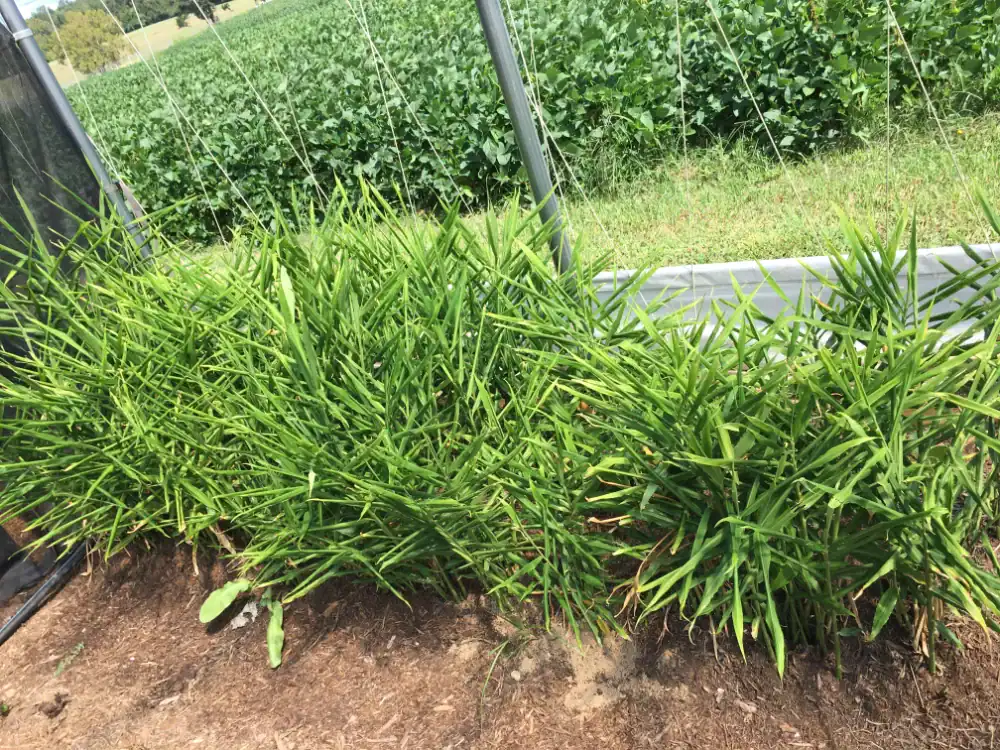
0% Shade
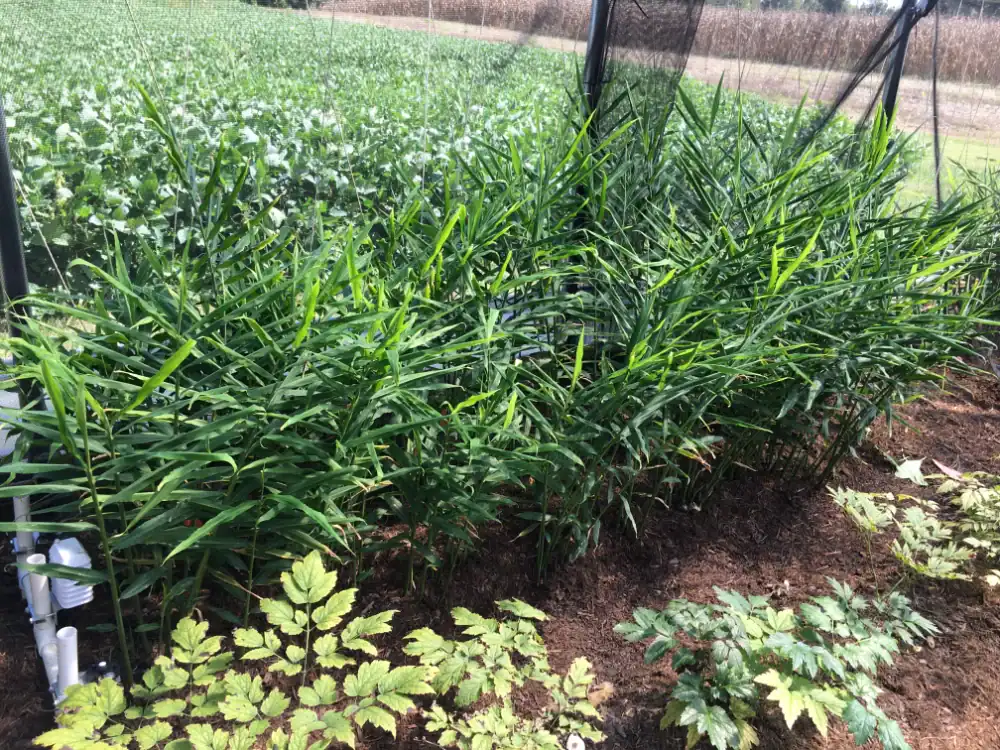
40% Shade
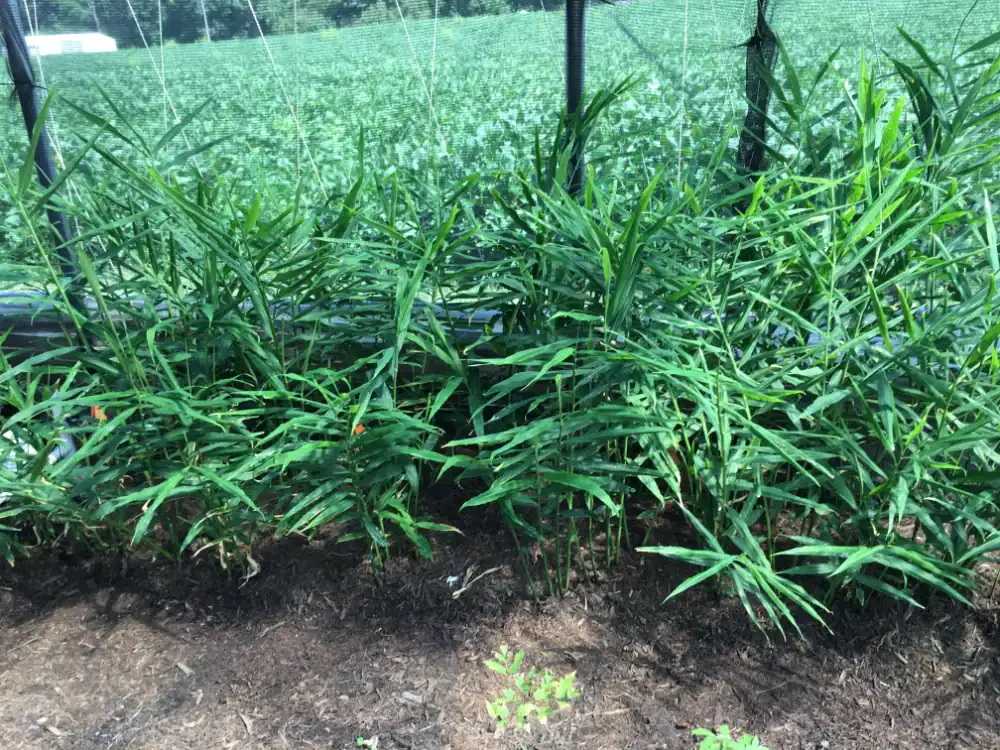
60% Shade
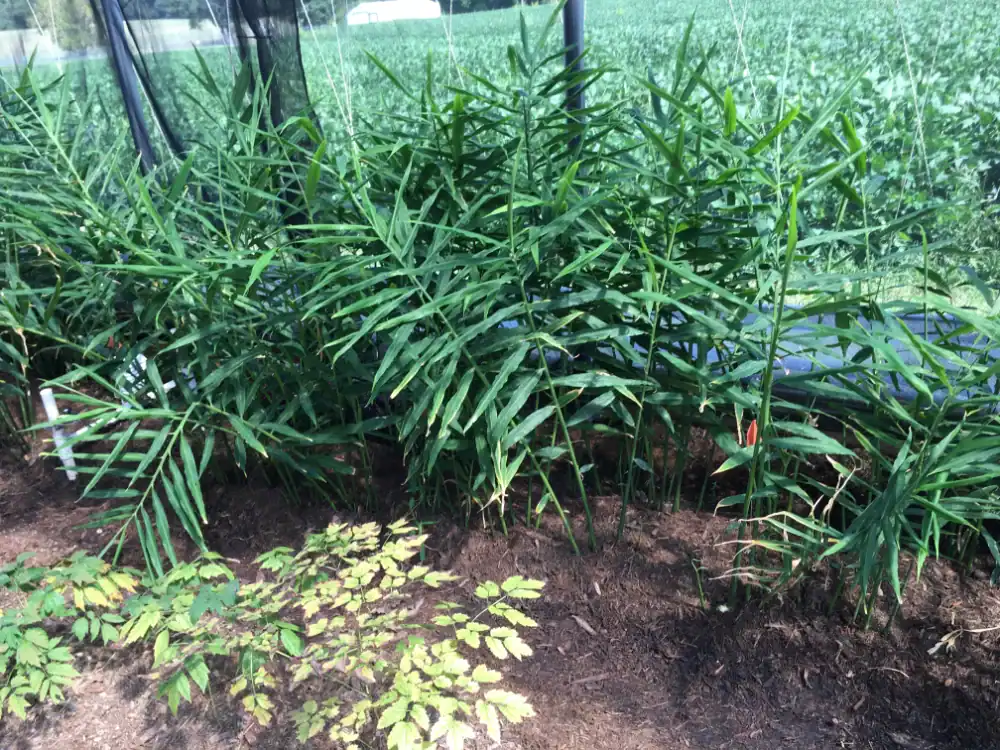
80% Shade
Average Rhizome Weight of Ginger Cultivars by Shade Percentage
Production Process Timeline
This flow chart demonstrates each step of overall ginger production process and general timeline.
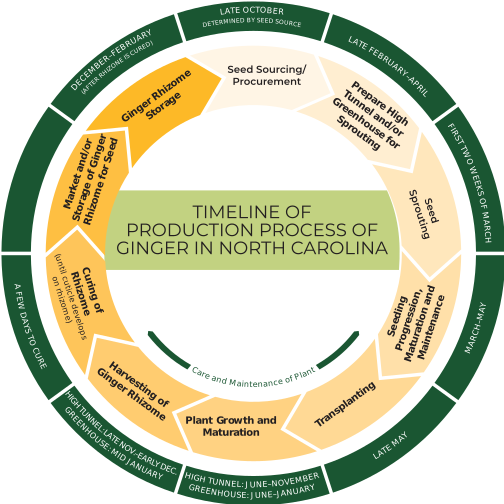
| Step | Stage | Timeframe | Notes / Environment |
|---|---|---|---|
| Step 1 | Seed Sourcing / Procurement | Late October | Determined by seed source |
| Step 2 | Prepare High Tunnel / Greenhouse for Sprouting | Late February–April | — |
| Step 3 | Sprouting Seed | First two weeks of March | — |
| Step 4 | Seeding Progression, Maturation & Maintenance | March–May | Care and maintenance of plant |
| Step 5 | Transplanting | Late May | Care and maintenance of plant |
| Step 6 | Plant Growth and Maturation | June–November (High Tunnel) June–January (Greenhouse) |
Care and maintenance of plant |
| Step 7 | Harvesting of Ginger Rhizome | Late Nov–Early Dec (High Tunnel) Mid Jan (Greenhouse) |
— |
| Step 8 | Curing of Rhizome | A few days | Until cuticle develops on rhizome |
| Step 9 | Market & Storage of Rhizome for Seed | December–February | After rhizome is cured |