Pest Survey & Above/Below Ground Pests
Survey of Insect Pests and Diseases that Can Affect North Carolina Ginger Production
Ginger (Zingiber officinale Rosc.) is a naturally growing herbaceous plant known for its edible rhizomes, or below-ground roots. Ginger is produced in many parts of Asia, Africa, and Hawaii (Nishina et al., 1914). Plants are produced annually, and the rhizomes are harvested, sold, used for seed, or processed. Ginger has many uses. Roots can be sold by the pound at fresh markets, and can be used for medicines, spices, teas, and candies. Ginger plants thrive in subtropical environments and heavily use water and fertilizers. Roots are vegetatively propagated and stored for future plantings, making them susceptible to many insect pests and diseases. This section will discuss the potential pests that can affect ginger production in North Carolina.
Above and Below Ground Pests
Ginger foliage and underground rhizomes can be affected by insects and nematodes. Potential pests of above-ground growing structures in North Carolina are insects with chewing mouth parts, such as coleopteran, orthopteran, and lepidopteran pests. These types of pests create feeding holes and/or skeletonize the foliage, preventing the plant from conducting photosynthesis. Other pests of the above-ground growing structures are piercing-sucking insects such as aphids, scales, whiteflies, mealy bugs, and plant hoppers. These insects suck up the rich carbohydrate sources of above-ground leaf material and leave behind sooty mold that can prevent the crop from photosynthesizing. Piercing-sucking insects are among the group of insects that can also transmit viruses that can be passed on and expressed in propagated or stored seeds (rhizomes) (Green et al., 2018).
Ginger can be susceptible to below-ground soil-inhabitant pests such as plant parasitic nematodes. Nematodes are microscopic worms that cause economic damage by feeding on the roots and tubers of many fruit and vegetable crops, including ginger and turmeric (Thakur et al., 2020). Potential nematode species that can be found affecting ginger rhizomes are root-knot nematodes (RKN), Meloidogyne spp., lesion nematodes or Pratylenchus spp., and spiral nematodes or Helicotylenchus spp. (Thakur et al., 2020). Soil type and cultivation play an essential role in the types of nematodes found in the root zone where ginger is produced. Not only can insects, viruses, and nematodes affect ginger, biotic organisms such as fungi and bacteria can also reduce ginger yields.
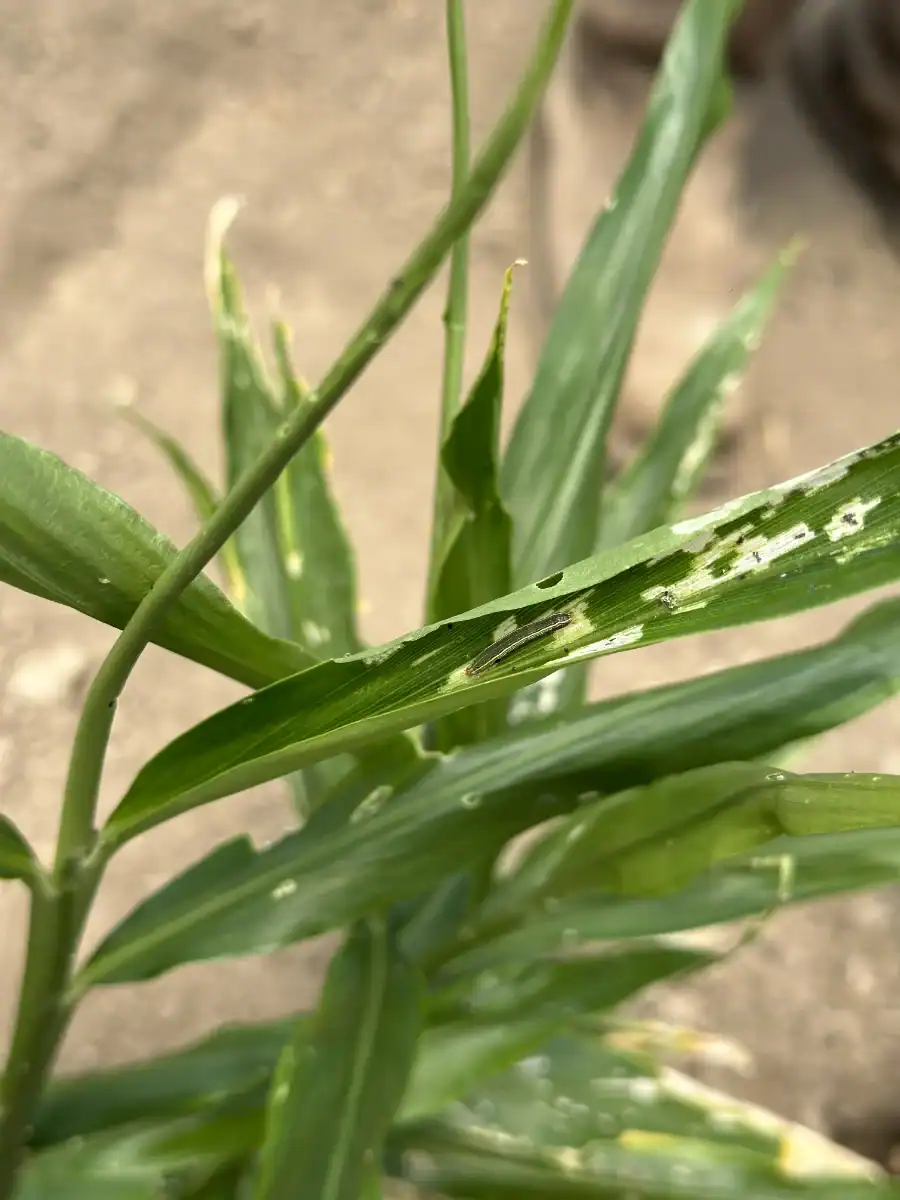
Yellow-striped armyworm larvae feeding on ginger leaves.
Courtesy of Hannah Talton,
DPM, N.C. A&T
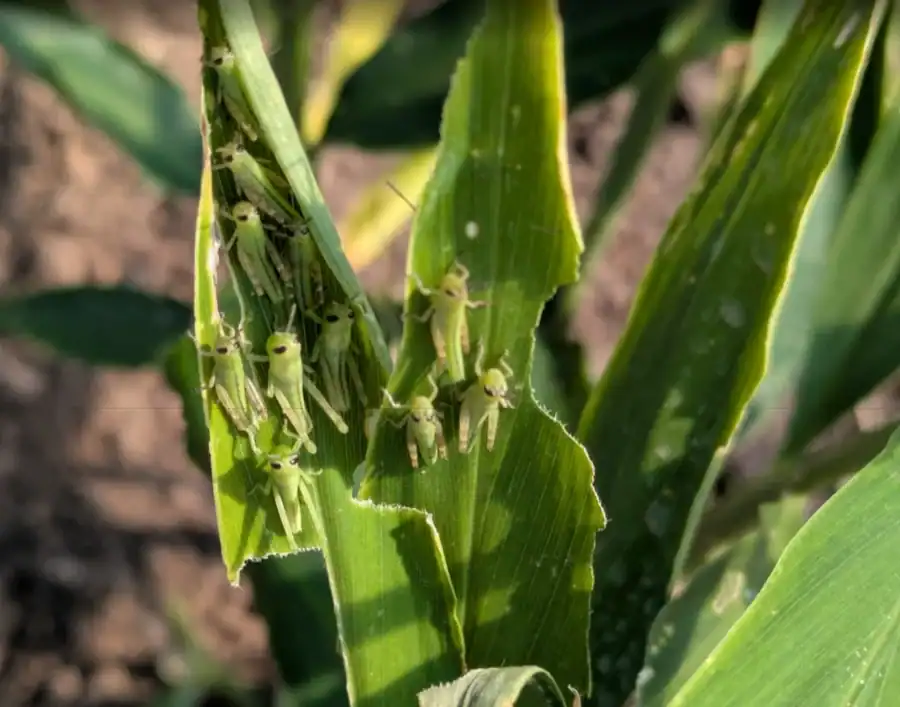
Adult grasshoppers on a ginger leaf in a high tunnel.
Courtesy of
Hannah Talton, DPM, N.C. A&T