Plant Diseases Above & Below Ground
Survey of Insect Pests and Diseases that Can Affect North Carolina Ginger Production
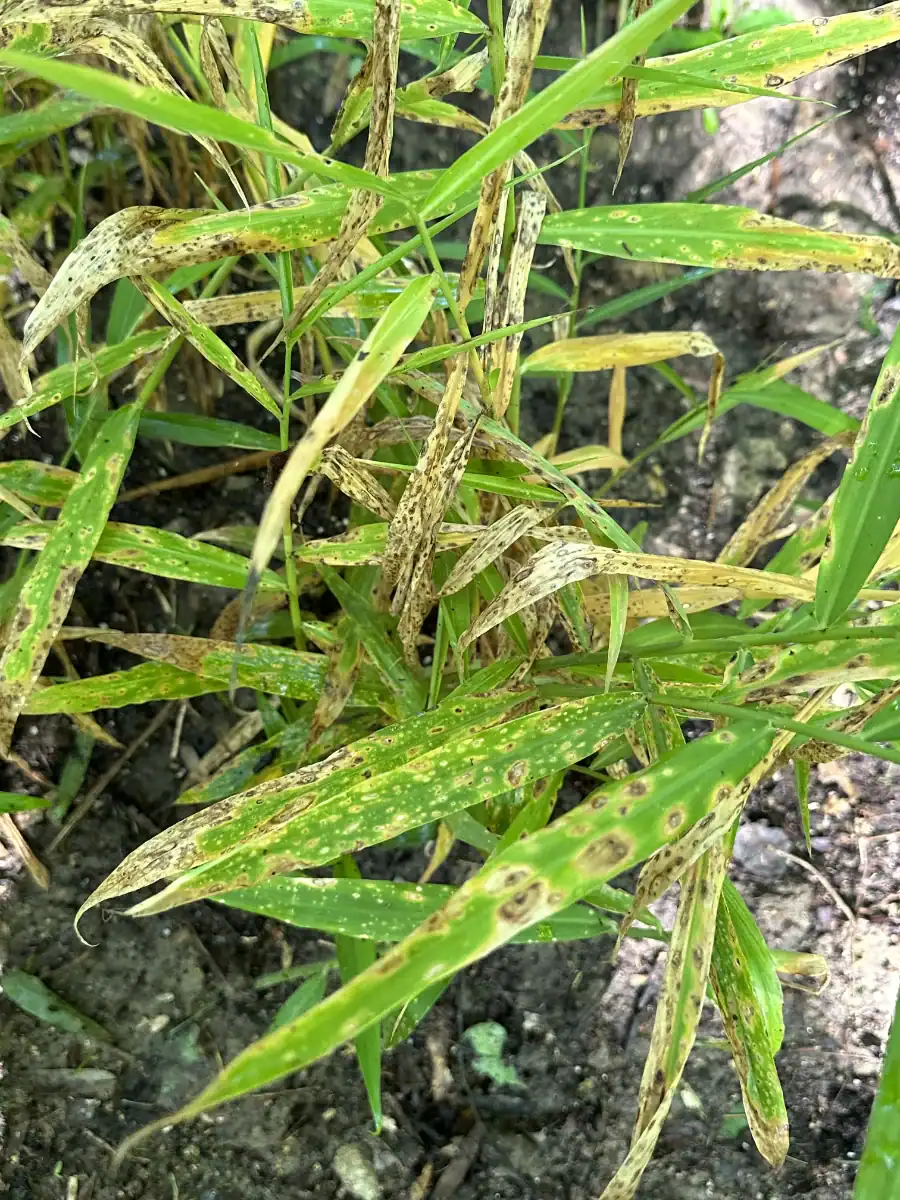
Leaf spot symptomology on ginger leaves.
Courtesy of Hannah Talton, DPM, N.C. A&T
Of the many biotic organisms that could potentially affect ginger production in North Carolina, plant diseases are among the most harmful. Bacterial and fungal pathogens are the most economically impactful biotic organisms for the production of ginger. Bacterial pathogens show themselves above ground as water-soaked leaf spots or below ground as soft rots and wilts. Fungal pathogens can also cause above-ground symptomology in the form of leaf spots. Spores or hyphae can be soil- or seed-borne, which can also cause below-ground rhizome soft rots. Above-ground leaf spots caused by bacterial and fungal pathogens affect the foliage of the crop, preventing photosynthesis, causing yellowing, chlorosis, and eventually death of both older and younger leaves. The most common leaf spots that occur in ginger are Alternaria spp., Phyllosticta spp., Colletotrichum spp., Septoria spp., Cercospora spp., and a rust disease caused by Pyricularia spp. (Gupta, 2020; Nishina et al., 1914).
Fungus and bacteria can be dispersed from plant to plant via persons, equipment, plant debris, wind, and water. It should be noted that different ginger varieties can be susceptible to different pathogens than others. One of the most prevalent bacterial diseases that affect ginger is bacterial wilt caused by Ralstonia solanacearum. This soil-borne bacteria can be found in North Carolina on various vegetable crops. (Gupta, 2020). Ralstonia solanacearum can have many different races and strains, making its host infection very specific. This pathogen survives on rhizomes and can spread vegetatively through ginger seed production, causing loss if not prevented or treated.
Other pathogen organisms that cause soft rot in ginger are Pythium and Fusarium species (Yadav, 2023). Both are soil-borne pathogens and can cause complete loss of a ginger crop. Above-ground structures will display a wilting symptom, turn brown, and collapse. Below ground, the structure will become soft and dark brown to black and will not produce. Pythium spp. thrive in heavy rain environments and soil with high clay composition and poor drainage. Fusarium yellows or ginger blight are common diseases caused by Fusarium oxysporum f. sp. zingiberi (Prasath et al., 2023). Fusarium oxysporum f. sp. zingiberi grows in humid, wet environments and high soil temperatures (Gupta, 2020). Determining which pathogen is causing the damage above or below ground may require submitting plant samples to a plant diagnostic laboratory for identification to implement proper treatment.
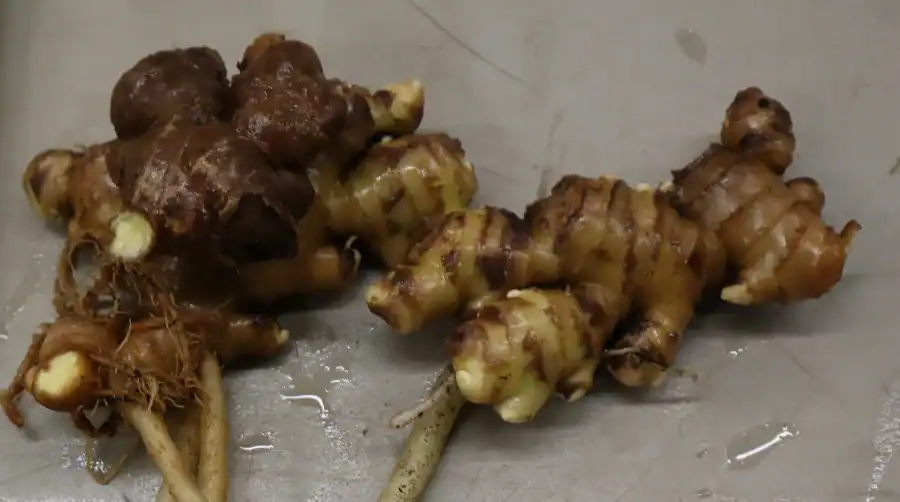
Soft rot symptomology on harvested ginger rhizome.
Courtesy of Julia Robinson, N.C. A&T